
What the Dauphin County Prothonotary Does
The Prothonotary is an elected office that records and files the legal papers of the civil court. In Dauphin County, Antonio Carreno leads the office. It handles arbitration hearings, argument court, civil trials, building agreements, name changes, the issue of divorce certificates, and landlord-tenant disputes. The office is elected to a four-year term and works as the official keeper of civil case records.
Think of the Prothonotary as the civil counterpart to the criminal clerk. Civil matters go here. Criminal and juvenile matters go to the Clerk of Courts. Estates go to the Register of Wills. Knowing this split is the first step to finding a record.
The word itself trips people up. Prothonotary is an old title for the chief civil clerk of the court, used in Pennsylvania and a few other states. It is not a typo for notary. So when a form, a lawyer, or a court order tells you to file with the Prothonotary, it means the civil clerk's office, the same place you would search for a civil judgment or a divorce certificate.
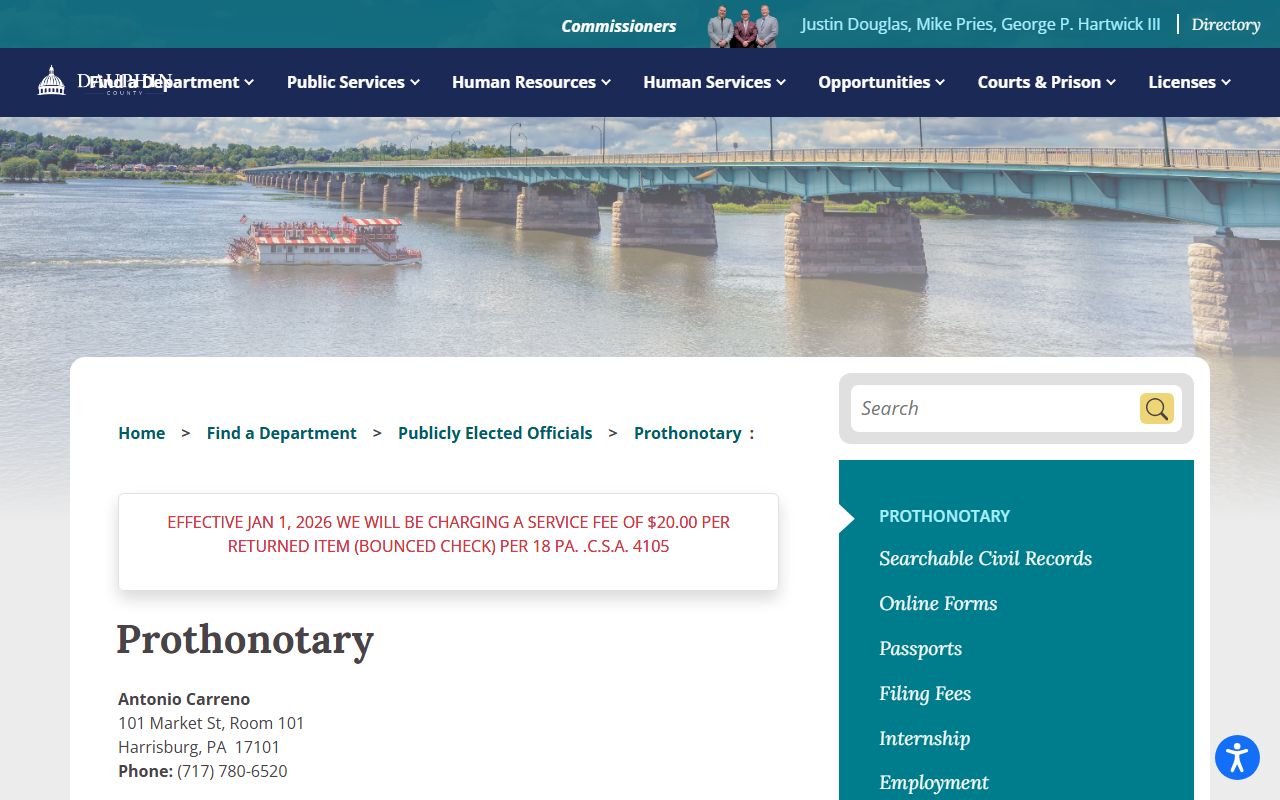
The official Prothonotary page lists the office address, phone, and the civil records it keeps.
How to Search Dauphin County Prothonotary Records
The county runs a public civil case search through its CountySuite system. Current civil records run from November 1, 2001 to the present. The statewide court portal also shows Common Pleas civil dockets. You search by name, and the office cautions that online data is informational while the official record stays in the office. Keep in mind that some civil Common Pleas data does not display in the statewide portal, so the county tool is often the better choice for civil matters.
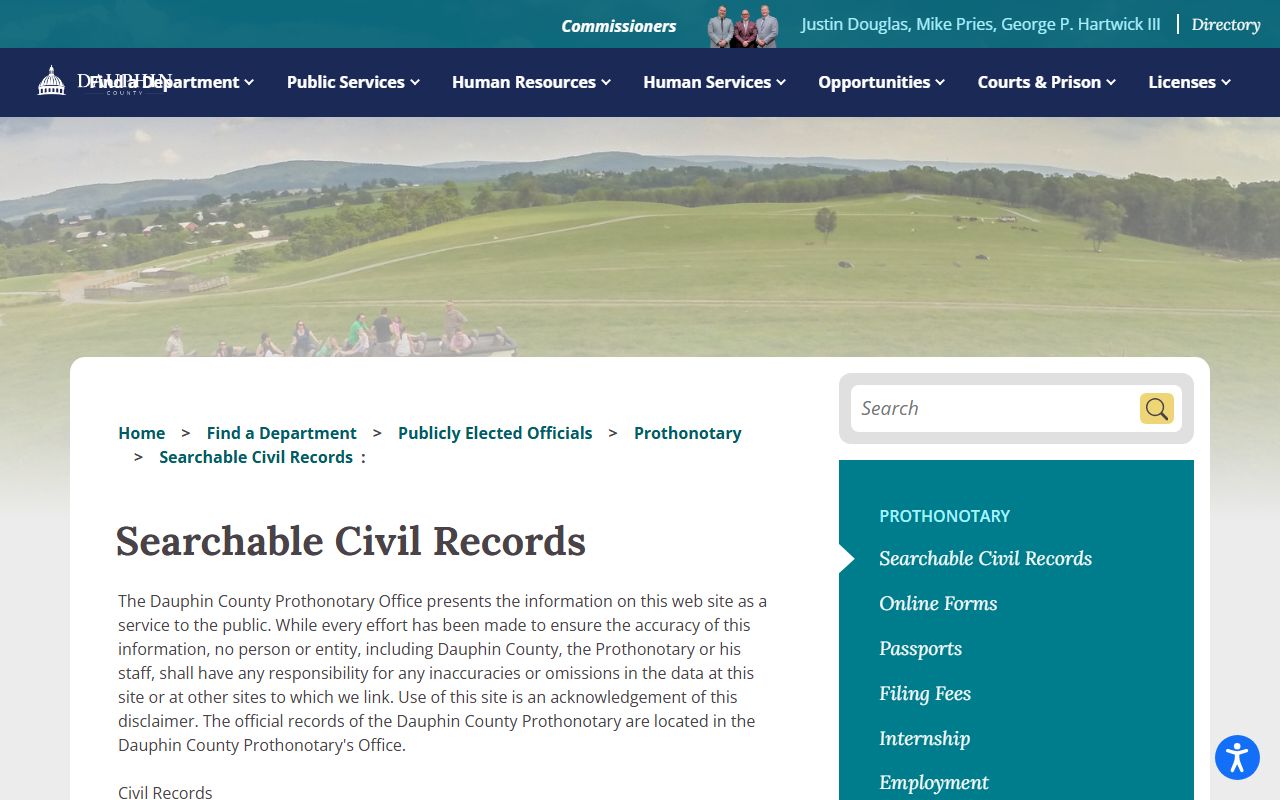
The Searchable Civil Records page links the current civil search and the older legacy indexes.
- Open the Prothonotary Searchable Civil Records page.
- For cases since November 2001, use the CountySuite civil case search.
- Search by name, then open the matching civil docket.
- For older cases, use the legacy index links provided.
- Contact the office for a certified copy of the official record.
Prothonotary Civil Search Fields
The CountySuite civil search centers on a main search field with optional advanced filters. The table lists the fields and controls you will see. The advanced options help narrow a large name result.
| Field Label | Type | Required | Notes / Format |
|---|---|---|---|
| Search text | Text | Yes | Main search field for name or party. |
| Request Category | Dropdown | Optional | Advanced filter for case category. |
| Contact Category | Dropdown | Optional | Advanced filter for party role. |
| Judgment Only | Checkbox | Optional | Limits to judgment records. |
| Include Attorneys | Checkbox | Optional | Adds attorney records to results. |
Civil Records the Prothonotary Keeps
The office holds the full range of civil Common Pleas filings. These records track a civil case from complaint to judgment, and they include the orders and writs a court issues along the way. The list shows the common record types you can search.
- Civil suits - complaints, answers, and trial records.
- Judgments and liens - money judgments and their satisfaction.
- Name changes - petitions and orders to change a legal name.
- Divorce - civil divorce filings and divorce certificates.
- Landlord-tenant - civil disputes at the Common Pleas level.
Divorce, in particular, is filed here, not with the Register of Wills. See the marriage and divorce records page for the divorce path.
Civil cases differ from criminal ones in a basic way. A civil case is a dispute between parties, often over money, property, or a family matter, where one side asks the court for relief. The Prothonotary records each step, from the first complaint through any judgment and its later satisfaction. That paper trail is what you search when you want to confirm a lien, check a judgment, or pull a civil case history.
Prothonotary Office Contact and Hours
The Prothonotary sits in the Dauphin County Courthouse in Harrisburg. Use the contact card below for the office address, phone, and hours. The official record lives here, so this is where certified civil copies come from.
Dauphin County Prothonotary
101 Market Street, Room 101
Harrisburg, PA 17101
(717) 780-6520
Mon-Fri 8:00 a.m. to 4:30 p.m.
Prothonotary Filing Fees and Costs
Civil filings and copies carry fees set by court and state rules. A statewide fee change in late 2025 set a base charge for most cases under the state fiscal code, which applies to all cases except summary traffic. The office also added a returned-item fee for bounced checks, effective in January 2026, under the state crimes code. Filing fees beyond these base amounts depend on the case type, so the table below is a starting point, not a full schedule. Confirm current figures with the office before you file or pay.
| Item | Amount |
|---|---|
| State case fee, most cases except summary traffic | $41.25 |
| Returned item or bounced check service fee | $20.00 |
| Certified copy, 5 pages or fewer | $10.00 |
| Each additional page | $1.00 |
How to Request a Certified Civil Copy
A certified copy carries the office seal and is the version courts and agencies accept. Online dockets are informational, so order a certified copy when you need an official record. People often need a certified divorce certificate, a judgment, or a name-change order for a bank, an agency, or another court. The steps below outline the request.
- Find the civil case and note the docket number.
- Contact the Prothonotary by phone, mail, or in person.
- Identify the document and the number of certified copies you need.
- Pay the copy and certification fee by an accepted method.
- Receive the certified copy with the office seal.
Order more than one copy if several agencies will each want an original on file for their own records.
Online Civil Search and E-Filing
Beyond the public search, the county runs a civil court electronic filing portal. It requires a login for e-filing and a logged-in civil case search. The registration page warns that special characters in your sign-up details cause an error, and that a confirmation email may land in a spam folder or be blocked by a firewall.
The public search needs no login and covers cases since November 2001. The e-filing portal is for attorneys and parties who file documents. Both connect to the same civil records the office keeps.
If you only want to look up a case, the public search is all you need. The e-filing system matters when you are a party filing a complaint, an answer, or a motion. Self-represented filers can find civil and family forms through the county Self Help Center, which sits in the courthouse Law Library and provides instructions, though staff cannot give legal advice.
Older Civil Records
The Prothonotary holds deep civil history through legacy indexes. A Misc. and Ejectment Index covers 1785 through mid-1973 and then 1973 through 1991. A Suits Index handles name and docket searches from 1992 through October 2001. Records before the current system often need one of these indexes or an office visit.
The office is also moving to a new case management system, so it warns that some records may not be online yet. For anything you cannot find, the office counter can pull the paper file.
This matters for older searches in particular. A case from the 1990s or earlier may not appear in the public search even when it exists. The legacy indexes bridge that gap, but they take more effort than a simple name search. If you are researching an old judgment or a historic civil matter, plan to use an index link or call the office for help locating the right book and page.
Prothonotary vs Clerk of Courts
Pennsylvania splits the clerk role in two. The Prothonotary keeps civil records. The Clerk of Courts keeps criminal and juvenile records. Sending a request to the wrong office is the most common delay, so the comparison below sorts them out.
| Point | Prothonotary | Clerk of Courts |
|---|---|---|
| Records | Civil cases and judgments | Criminal and juvenile cases |
| Examples | Divorce, name change, civil suits | Charges, pleas, sentences |
| Courthouse room | Room 101 | Room 100 |
Both offices sit in the same courthouse, just doors apart, but they keep separate records and charge their own fees. For criminal records, see the Clerk of Courts page.