
What the Dauphin County Clerk of Courts Does
The Clerk of Courts is an elected office established by the Pennsylvania Constitution. In Dauphin County, Tina L. Nixon leads it. The office is an officer of the court, independently elected to a four-year term. Its main job is to record, maintain, and process criminal and juvenile records for the Court of Common Pleas. The office also assesses court costs and fines, prepares prison commitments, processes bail, and handles motions, petitions, and summary appeals. Because it is constitutional rather than appointed, the office answers to voters, not to the judges whose records it keeps.
Cases reach the office two ways. Most arrive after a Magisterial District Court binds a charge over for trial. Others come straight from a courtroom disposition once a judge rules. The office also files appeals to the Pennsylvania Superior and Supreme Courts, and it even licenses private detectives, a lesser-known duty alongside its criminal records work.
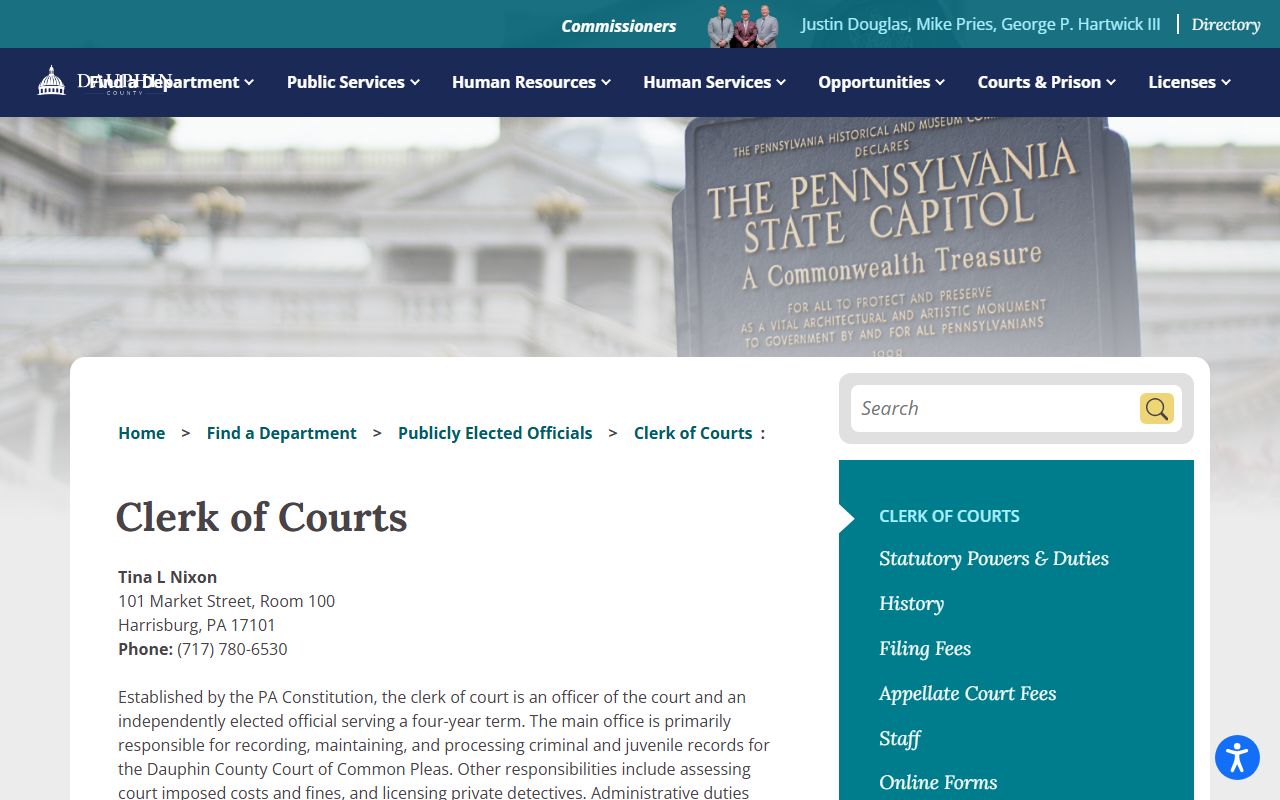
The official Clerk of Courts page lists the office contact and the criminal record duties it carries.
How to Search Dauphin County Criminal Court Records
Public criminal dockets for the Court of Common Pleas show in the statewide Unified Judicial System portal. You search by participant name or docket number, then open the docket sheet. The Clerk of Courts holds the official file, so certified criminal copies come from the office directly, not from a screenshot.
Dauphin County criminal dockets carry a CP-22 prefix. The portal warns that juvenile, expunged, and limited-access cases may not appear, and that a docket sheet is not a criminal-history background check.
The portal and the office serve different needs. The portal is fast and free for a quick public lookup of a criminal docket. The office holds the full, official file and is the only place to get a certified copy with a seal. So use the portal to find a case and read its status, then turn to the Clerk of Courts when you need an official document for court, an agency, or a lawyer.
- Open the UJS Web Portal case search.
- Choose Participant Name or Docket Number and select Dauphin County.
- Open the criminal docket to read charges, bail, and disposition.
- For a certified criminal copy, contact the Clerk of Courts.
- For a statewide criminal history, request a check from the Pennsylvania State Police.
Records the Clerk of Courts Keeps
The office holds the criminal side of the Common Pleas case file. These records track a criminal case from the filed information through sentencing and any appeal. The list shows the common record types.
- Criminal cases - informations, pleas, verdicts, and sentences.
- Bail records - bail set, posted, and forfeited.
- Prison commitments - paperwork that commits a person to custody.
- Summary appeals - appeals of summary convictions from the magisterial courts.
- Juvenile records - kept here but largely confidential by law.
- Private detective licenses - issued and recorded by the office.
For the arrest and booking side of a case, see the arrest records page.
A criminal file builds in layers. It starts with the information, the formal charging document the prosecutor files in Common Pleas. Then come arraignment, motions, plea or trial, and sentencing. Each step is a docket entry, and the office keeps the underlying papers. Financial entries also live here, since the Clerk of Courts assesses and tracks the costs, fines, and restitution tied to a sentence.
Clerk of Courts Contact and Hours
The Clerk of Courts sits in the Dauphin County Courthouse, one room over from the Prothonotary. Use the contact card below for the office address, phone, and hours. Certified criminal copies come from this office.
Dauphin County Clerk of Courts
101 Market Street, Room 100
Harrisburg, PA 17101
(717) 780-6530
Mon-Fri 8:00 a.m. to 4:30 p.m.
Clerk of Courts Filing Fees
Criminal filings and copies carry fees set by court and state rules. A statewide fee change in late 2025 set a base case charge that applies to all cases except summary traffic. The table shows sample amounts; the office posts a full filing-fee list online. Some costs, like restitution and supervision fees, are not copy fees at all but part of a sentence the office tracks. Confirm current figures with the office before you pay.
| Item | Amount |
|---|---|
| State case fee, most cases except summary traffic | $41.25 |
| Certified copy, 5 pages or fewer | $10.00 |
| Each additional page | $1.00 |
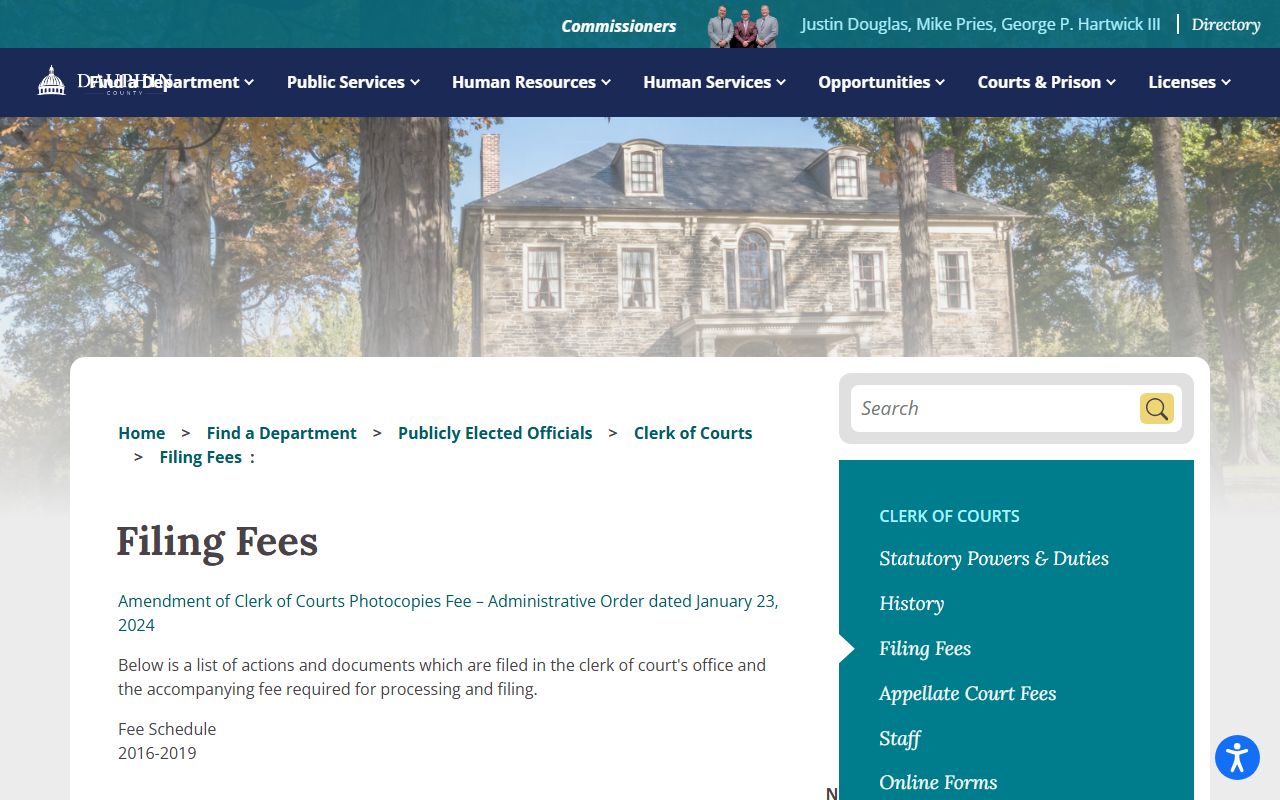
The Clerk of Courts filing fees page lists the full schedule of criminal filing costs.
Clerk of Courts Forms
The office posts an online form library for criminal matters. It includes an expungement packet, a guide on common expungement delays, a certificate of indigency, summary appeal forms, private investigator forms, and appeal-related forms. These forms cover the most common filings a person makes with the criminal clerk. A certificate of indigency, for example, lets a person who cannot afford fees ask the court to waive them, which can matter in an expungement or an appeal.
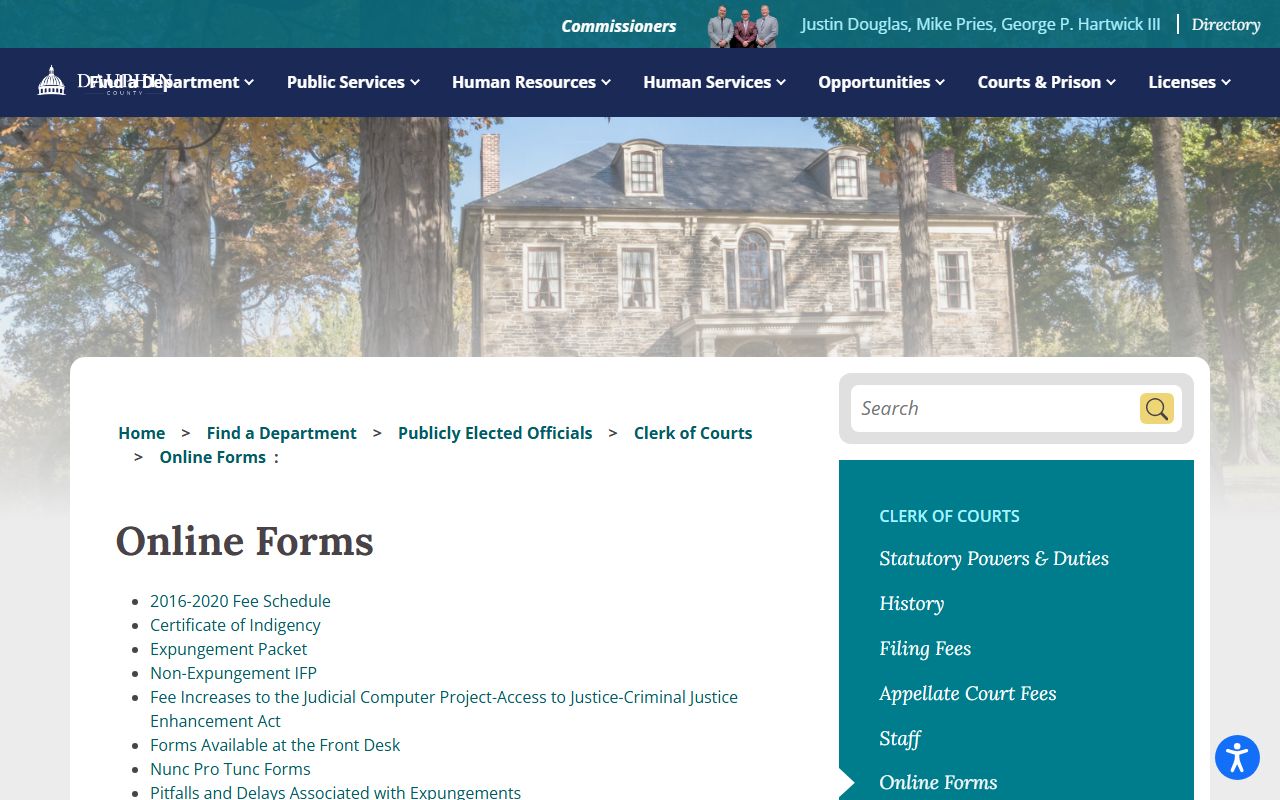
The Clerk of Courts online forms page lists the criminal forms you can download, including the expungement packet.
How to Request a Certified Criminal Copy
A certified copy carries the office seal and is the version courts and agencies accept. Online dockets are informational, so order a certified copy when you need an official record. The steps below outline the request.
- Find the criminal case and note the CP-22 docket number.
- Contact the Clerk of Courts by phone, mail, or in person.
- Identify the document and the number of certified copies you need.
- Pay the copy and certification fee by an accepted method.
- Receive the certified copy with the office seal.
Expungement and Limited Access
People often contact the Clerk of Courts to clear an eligible criminal record. Pennsylvania offers two main paths. Expungement removes a record under the criminal-history statute. Limited access, sometimes called sealing, hides a record from most public view. The office publishes an expungement packet and a guide on common delays.
Adult expungement runs under 18 Pa.C.S. § 9122, and the broader rules on criminal history sit in 18 Pa.C.S. Chapter 91. Common delays come from missing docket numbers, the wrong court, unpaid costs, incomplete service, or trying to expunge a conviction the law does not make eligible.
The office cannot give legal advice, so it points filers to the packet and the statute rather than telling them whether a record qualifies. A clean petition with the right docket number, the correct court, and any required service moves faster. If a case ended in a diversion program such as ARD, completing that program can open expungement eligibility, which is one reason people return to the office after a case closes.
Summary Appeals and Appellate Filings
The Clerk of Courts handles summary appeals, where a person appeals a summary conviction from a Magisterial District Court to the Court of Common Pleas. The office also processes appeals to the Pennsylvania Superior and Supreme Courts. A request to delay a license suspension pending appeal is one of the forms the office lists.
These appellate steps connect the county trial court to the state appellate courts. For how the court levels fit together, see the Court of Common Pleas page.
A summary appeal is worth understanding, since it is common. When a Magisterial District Court convicts someone of a summary offense, that person can appeal for a fresh hearing in Common Pleas. The Clerk of Courts dockets that appeal and tracks it through to a new decision. Higher appeals, to the Superior or Supreme Court, follow once a Common Pleas case is final, and the office prepares the record for those courts.
Clerk of Courts vs Prothonotary
The split between the two clerks confuses many people. The Clerk of Courts keeps criminal and juvenile records. The Prothonotary keeps civil records. Sending a request to the wrong office is the most common delay, so the comparison below sorts them out.
| Point | Clerk of Courts | Prothonotary |
|---|---|---|
| Records | Criminal and juvenile cases | Civil cases and judgments |
| Examples | Charges, pleas, sentences | Divorce, name change, civil suits |
| Courthouse room | Room 100 | Room 101 |
For civil records, see the Prothonotary page.