
How to Find Dauphin County Arrest Records
A recent arrest in Dauphin County usually shows up first on the county jail roster. When charges are filed, the case opens a court docket you can search by name or docket number. Two free tools cover most needs. The Dauphin County Prison inmate lookup shows who is in custody now. The statewide Unified Judicial System (UJS) portal shows the criminal docket once charges are filed.
Before searching, gather a full name and a rough arrest date. The county prison handles booking, so the jail roster is the fastest check for a very recent arrest. If the person has already been released or sentenced, the court docket will hold the current record.
- For someone in custody now, use the Dauphin County inmate records lookup.
- For the court case, open the UJS Web Portal case search.
- Choose Participant Name or Docket Number and select Dauphin County.
- Open the docket to read charges, bail, and hearing dates.
- For a statewide criminal history, request a check from the Pennsylvania State Police, not the docket portal.
Where Arrests Are Recorded in Dauphin County
An arrest in Dauphin County moves through a clear chain. A police agency makes the arrest and files a complaint. The person is booked, often at Dauphin County Prison on Mall Road in Harrisburg. A Magisterial District Court holds the early steps, including a preliminary arraignment and a preliminary hearing. If the case is strong enough, the court binds it over to the Court of Common Pleas for trial.
Each step leaves a record. Booking creates a jail record. The complaint and hearings create a magisterial docket. Once bound over, the Clerk of Courts opens the Common Pleas criminal file. The arrest is the start of that trail, not the whole story.
Several police agencies operate in Dauphin County, from city and township departments to state and campus police. Whichever agency makes the arrest, the case still flows into the same county court system. That is why the UJS docket search and the county jail roster cover arrests no matter which department was involved.
Arrest Record vs Criminal Court Record
An arrest record and a criminal court record are not the same thing. One captures the moment of arrest and booking. The other tracks the case through the courts. The table sorts out the difference.
| Feature | Arrest Record | Criminal Court Record |
|---|---|---|
| Created by | Police and the jail at booking | The court clerk when charges are filed |
| Shows | Arrest, charges booked, custody status | Filings, pleas, disposition, sentence |
| Where to find it | Jail roster and booking data | UJS docket and Clerk of Courts file |
| Means guilt? | No, an arrest is an accusation | Only a conviction or plea proves guilt |
What a Dauphin County Arrest Record Shows
An arrest record and the criminal docket that follows carry a set of standard fields. Read them together to understand the full picture of a case. The list below shows the common fields.
| Field | What It Shows |
|---|---|
| Name and identifiers | The person arrested, plus a DCP number for jail records. |
| Arresting agency | The police department that made the arrest. |
| OTN | The offense tracking number for the case. |
| Charges | The offenses booked, with statute and grade. |
| Bail | The bail amount or condition set. |
| Disposition | The outcome of each charge once the case resolves. |
Charges vs Convictions
This distinction matters more than any other on an arrest record. A charge is an accusation. A conviction is a finding of guilt. Many charges are dropped, reduced, or end in acquittal. Reading only the charge can paint a false picture.
| Point | Charge | Conviction |
|---|---|---|
| What it is | An accusation at arrest or filing | A guilty plea or verdict |
| Proves guilt? | No | Yes |
| Where shown | Charge and OTN fields | Disposition and sentence fields |
Always check the disposition before you draw a conclusion about any Dauphin County arrest record.
Mugshots and Booking Information
A booking photo, often called a mugshot, is taken when a person is processed into the county jail. Booking also records a DCP number, charges, and a commitment date. Dauphin County Prison places new inmates in a Classification Unit for up to ten days while staff handle intake, medical screening, and housing decisions.
For custody status and booking detail, use the county jail tools described on the inmate records page. Avoid third-party mugshot sites, which often charge to remove photos and may post outdated or wrong information.
Booking also triggers a county booking fee. The jail charges $125 at intake, and other fees can follow during a stay. A booking record is separate from the court file, so a person released after booking may still have an open court case to track on the docket.
District Attorney and Public Defender
Two offices shape a Dauphin County criminal case. The District Attorney prosecutes charges on behalf of the Commonwealth. The Public Defender represents people who cannot afford a private lawyer. A defendant who needs a free lawyer can ask the court at the preliminary arraignment or hearing, or contact the Public Defender directly.
For criminal-record questions tied to an investigation, the county routes the request to the District Attorney's Right-to-Know officer at the Office of the District Attorney, 101 Market Street, 2nd Floor, Harrisburg. General court records, by contrast, come from the Clerk of Courts and the UJS docket search.
Criminal Court Records and the Clerk of Courts
Once charges are filed, the arrest becomes a criminal court case. The Clerk of Courts keeps these criminal and juvenile records for the Court of Common Pleas. The office handles bail, prison commitments, motions, summary appeals, and appeals to the state courts. For the full case history rather than just the arrest, see the Dauphin County court records page.
DUI and DWI arrests are criminal matters and follow this same court path, though the early steps run through a Magisterial District Court. Traffic-only matters are handled differently and appear on the traffic court records page. Some first-time DUI cases also route into the ARD diversion program, which can lead to expungement after a person completes its terms.
Public Access and the Criminal History Warning
Criminal dockets are public, but a docket is not a background check. The UJS portal states plainly that docket sheets should not stand in for a criminal-history check. Pennsylvania controls criminal history under the Criminal History Record Information Act.
Note: 18 Pa.C.S. Chapter 91 governs how criminal history record information is collected, kept, shared, and used in Pennsylvania.
For an official statewide criminal history, the request goes through the Pennsylvania State Police, which runs the formal background-check system separate from any county docket search.
Juvenile, Sealed, and Expunged Arrest Records
Some arrest records are closed to the public. Juvenile cases stay confidential under the Pennsylvania Juvenile Act. Adults may petition to clear eligible records, and the path depends on whether the record is expunged or sealed.
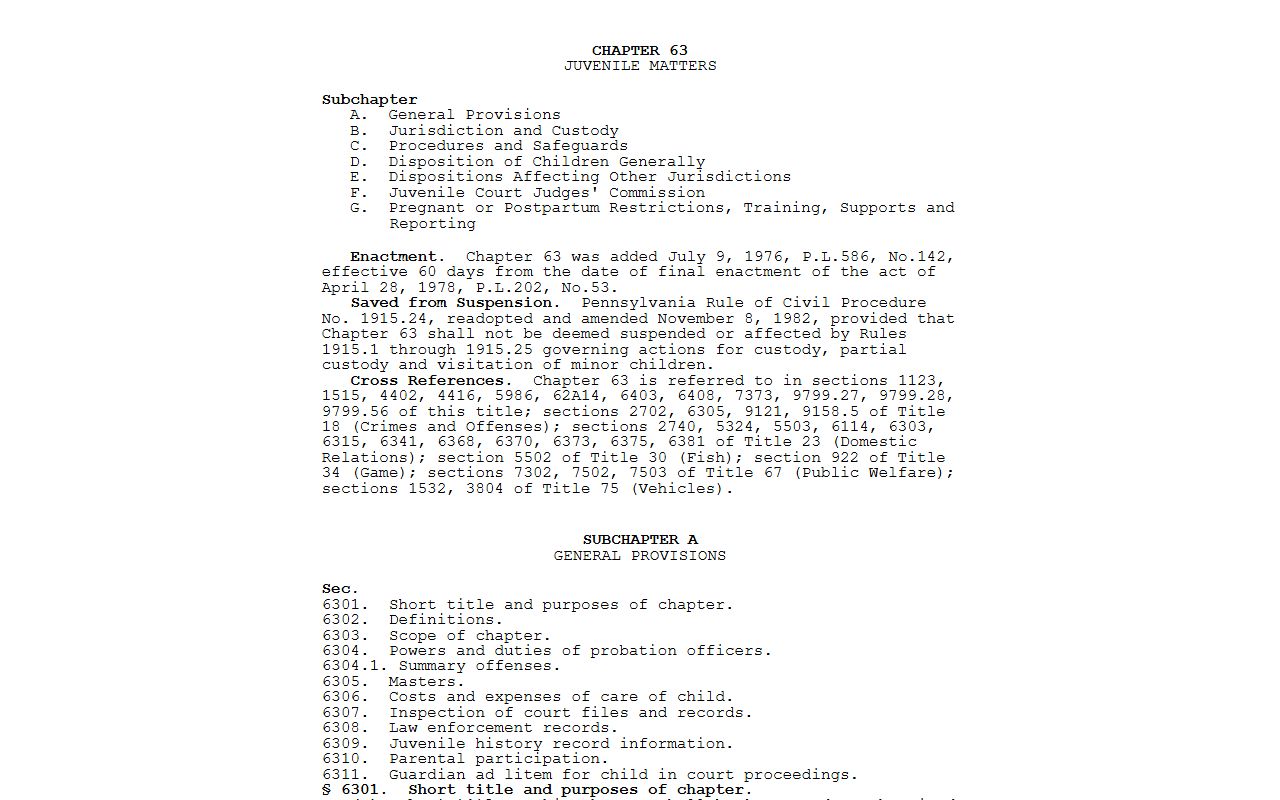
The Pennsylvania Juvenile Act sets the rules that keep most juvenile records out of public view. Adult and juvenile clearing run on two different tracks.
| Point | Sealed (Limited Access) | Expunged |
|---|---|---|
| What happens | Record hidden from most public view | Record removed and destroyed |
| Statute path | Act 5 of 2016 limited access | 18 Pa.C.S. § 9122 for adults |
| Shows in UJS? | No, not visible to the public | No, excluded from results |
The Clerk of Courts publishes an expungement packet and a guide on common delays, so check those before filing.
State and Federal Criminal Records
Not every Dauphin County case is a county case. Serious federal charges are filed in the U.S. District Court for the Middle District of Pennsylvania, with the U.S. Attorney prosecuting. Those records live in the federal system, not the county docket.
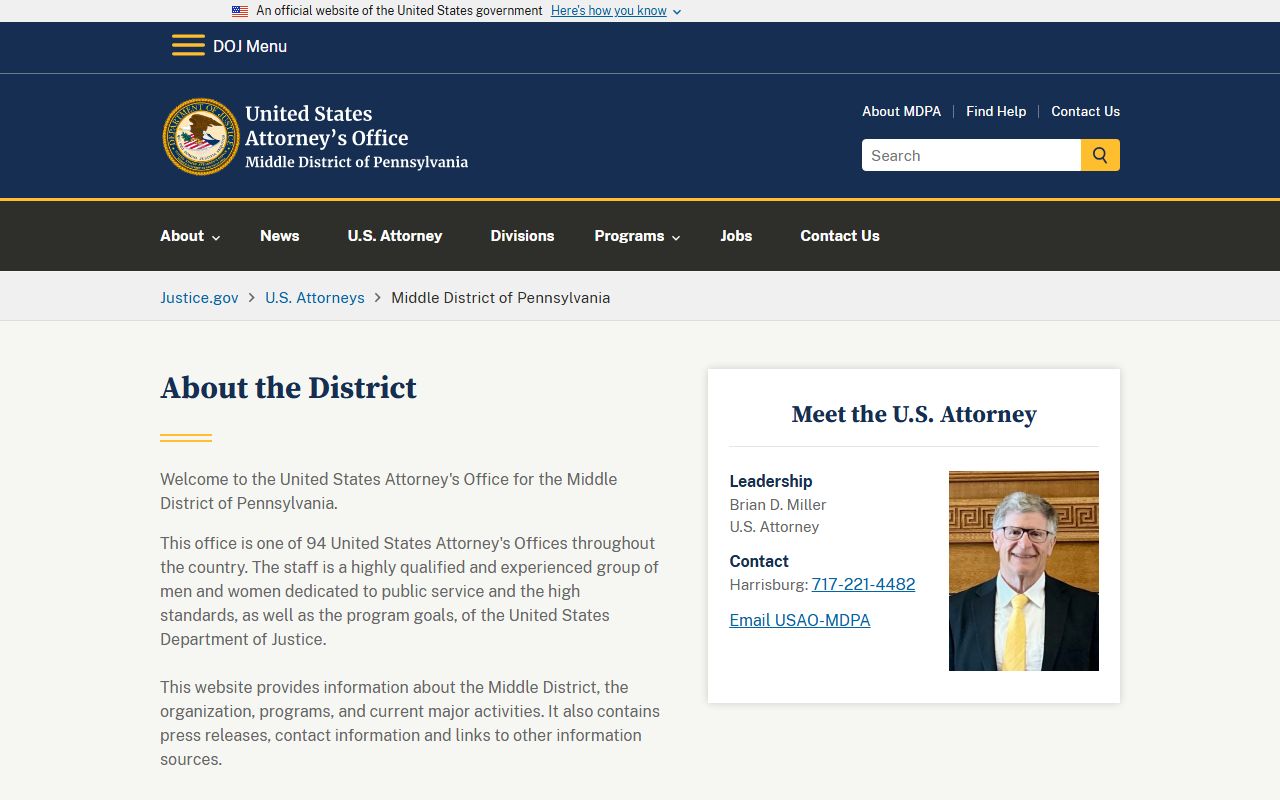
The U.S. Attorney for the Middle District of Pennsylvania prosecutes federal crimes that touch Dauphin County. Sex offenses carry a separate public registry.
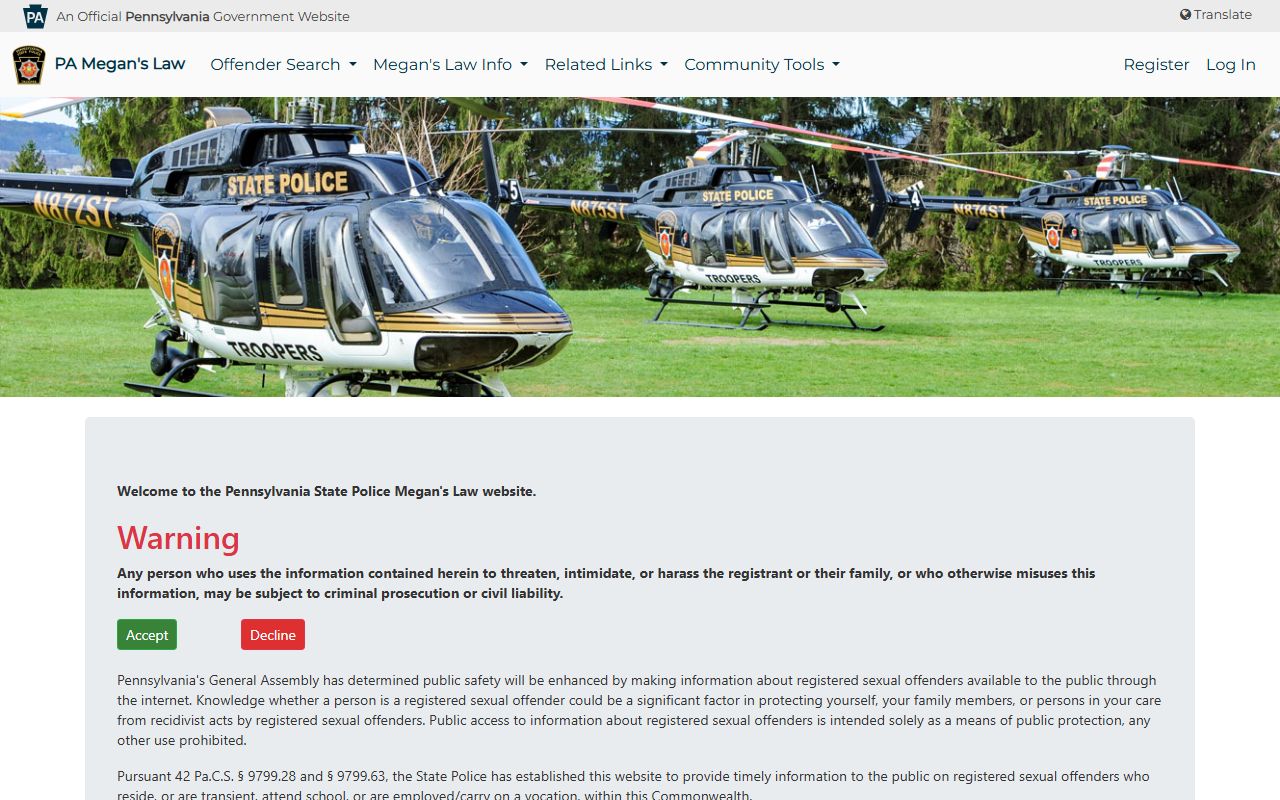
The Pennsylvania Megan's Law registry lets you search registered offenders by name, county, or map. For court opinions and some dockets, a free research tool is also available.
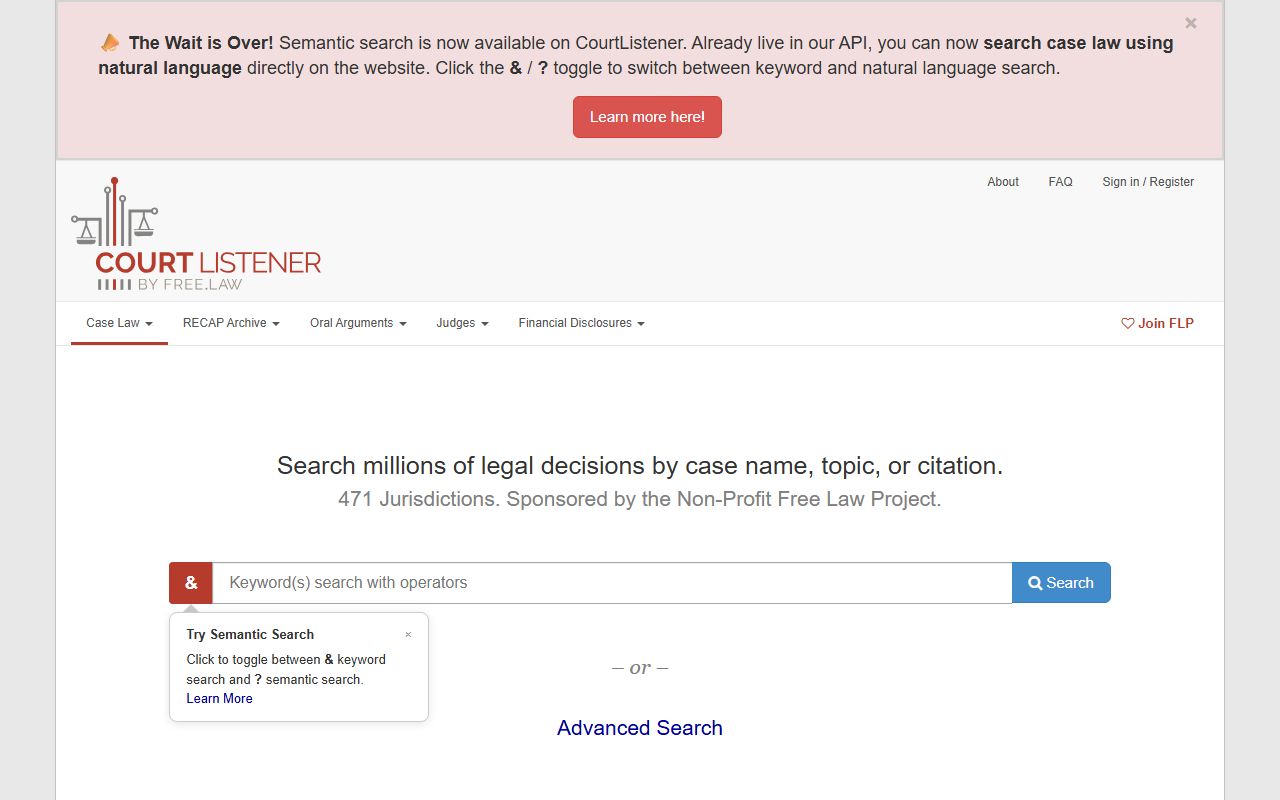
CourtListener offers opinions and dockets where available, but it is not the official filing system for any court.
Arrest Records and Background Checks
People use arrest records for many reasons, but the law limits some of them. This site and its tools are not a consumer reporting agency. You cannot use the data here to decide on hiring, housing, lending, or insurance. Those uses fall under federal credit-reporting rules. For a lawful background check, use the proper state channel and follow its rules.
There is also a timing point worth knowing. A docket can lag behind real events, and an old arrest may have been expunged or sealed since it first appeared. Always confirm a current status with the court before you rely on what an arrest record shows. The disposition field, not the arrest, is what tells you how a case actually ended.