
How to Look Up Dauphin County Jail Population Data
Jail population data is not a name search. It is a set of counts and percentages about the whole facility. The main official source is the Criminal Justice Advisory Board, which published a Point-in-Time Study of the Dauphin County Prison population for February 2025. The county posted the study through a prison news item and directs questions to a dedicated email.
To read the numbers, start with that official study rather than a third-party site. It captures a single snapshot of the jail and breaks it down by category. For a person rather than a count, the name lookup is covered later on this page.
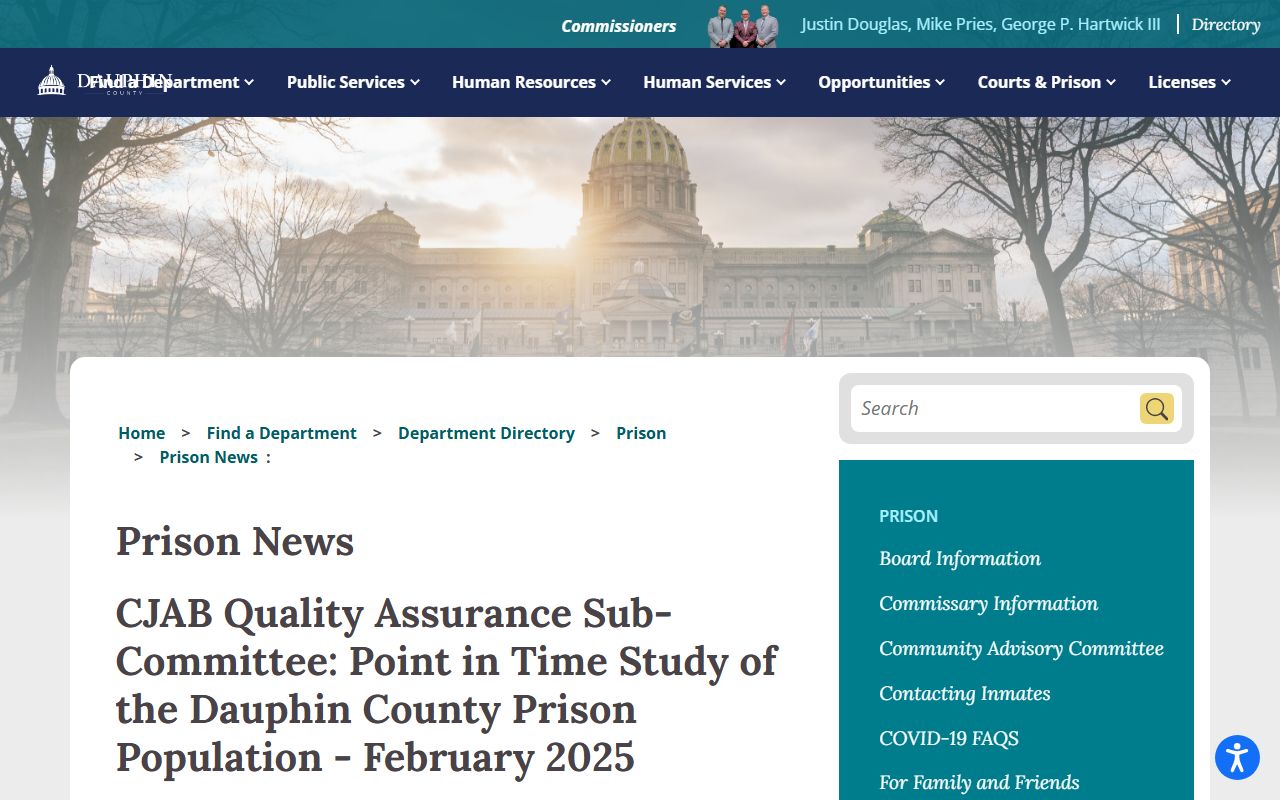
The county's prison news item links the February 2025 point-in-time study, the best official source for current population detail.
Dauphin County Jail Capacity Overview
Dauphin County Prison is the county's main detention facility, on Mall Road in Harrisburg. County treatment material describes services for roughly 1,000 inmates across minimum to maximum security. A published hard capacity figure was not listed in the county pages reviewed, so treat the 1,000 figure as a service-level reference, not a fixed cap. For an exact rated capacity, the county prison board is the office to ask.
| Facility | Address | Population / Notes |
|---|---|---|
| Dauphin County Prison | 501 Mall Road, Harrisburg, PA 17111 | Services described for about 1,000 inmates, minimum to maximum security. |
| Work Release | County court department | Listed as a county program; confirm facility detail separately. |
| Judicial Center / Central Court | 451 Mall Road, Harrisburg, PA 17111 | Court and arraignment site, not detention housing. |
Classification and Intake
Every person counted in the jail population first passes through intake. After booking, a new inmate goes to the Classification Unit, where they can stay up to ten days, not counting weekends and holidays. During this window, staff handle a physical exam, a chaplain or religious visit, and an intake interview. Outside agencies such as Pre-Trial Services, the Public Defender, and the Parole Office may also meet the person.
Classification shapes the population data. A Treatment Evaluator decides housing and security level, which feeds the breakdowns that a point-in-time study later reports. It also explains part of the jail's daily flow, since people move from intake into general population, work release, or treatment housing as their classification is set.
Average Daily Population
Average daily population, often shortened to ADP, is the typical number of people held on a given day over a period. A point-in-time count, like the February 2025 study, captures one day instead. Both measures matter. ADP smooths out daily swings, while a point-in-time count shows the makeup of the jail on a single date.
The CJAB February 2025 study is the official place to read these figures for Dauphin County. Because population data shifts week to week, the most current numbers should come straight from that study or a newer county prison board report rather than any outside estimate.
Why does the average matter? A jail near its working capacity has tighter housing, longer waits for programs, and more pressure on staff. A jail with room to spare can move people into treatment and work release more easily. So the average daily population is more than a number. It is a signal of how the whole system is running on a typical day, which is why the county tracks it through official studies.
Demographic Breakdown
A jail population study usually breaks the count down by age, sex, and race, and sometimes by charge type and length of stay. These breakdowns help the county plan housing, medical care, and programs. The Dauphin County point-in-time study reports this kind of detail for the February 2025 snapshot.
Exact demographic percentages belong to that official study, so read them there for accuracy. The categories matter as much as the raw counts. A jail with many people held pretrial has different needs than one mostly holding sentenced individuals, and demographic data guides those decisions.
Demographic data also drives program design. If a study shows a large share of younger inmates, the jail may lean into education and GED programming. If it shows many people with substance use histories, recovery and dual-diagnosis groups grow in importance. That is why the Criminal Justice Advisory Board studies the population, not just to count it, but to match services to need. Reading the breakdown tells you as much about the jail's programs as about the people held there.
Pretrial vs Sentenced Population
County jails hold two broad groups. Pretrial detainees are awaiting trial and have not been convicted. Sentenced inmates are serving a county sentence after a conviction. The split between the two shapes everything from bail policy to program planning.
| Group | Status | What It Reflects |
|---|---|---|
| Pretrial | Awaiting trial, not convicted | Bail, case backlog, and speed of court process. |
| Sentenced | Convicted, serving county time | Shorter county sentences after a guilty finding. |
The CJAB study reports the pretrial and sentenced split for the snapshot date. A high pretrial share often points to how quickly cases move through the courts.
Misdemeanor vs Felony Population
The charge grade is another way to read the jail. Some people are held on misdemeanor matters, graded M1 through M3 in Pennsylvania. Others face felony charges, graded F1 through F3 or ungraded. The mix tells the county how serious its held cases are and what supervision and treatment they need.
These figures, like the rest, come from the official county study. For the case behind any single grade, the court docket shows the charge, statute, and disposition, which you can reach through the court records page.
Mental Health and Medical Population
A share of any jail population has mental health or medical needs. Dauphin County Prison keeps contracted medical services on site, with sick call seven days a week and emergency care available. The treatment department runs counseling, dual-diagnosis, and relapse-prevention programming for people with substance use and mental health needs.
The county also operates specialty court programs that divert eligible people into treatment instead of jail. Mental Health Court, RALLY Recovery Court, and Team MISA all aim to reduce the jail's mental health and substance use load. Those programs appear on the Court of Common Pleas page and the county court programs listings.
Inside the jail, the treatment department lists a wide program menu: adult basic education, literacy, ESL, GED, a high school program, library services, in-house job assignments, work release, AA and NA, dual diagnosis, relapse prevention, violence intervention, domestic violence recovery, parenting, and therapeutic communities. The medical and mental health share of the population is a key reason these programs exist, and a population study helps the county size them correctly.
National and State Context
County jail data makes more sense against a wider backdrop. Nationally, the Bureau of Justice Statistics publishes annual jail population reports, and the Vera Institute tracks county-level trends. These sources measure jail use as a rate per 100,000 residents, which lets you compare counties of different sizes fairly.
| Level | Source | What It Measures |
|---|---|---|
| County | CJAB point-in-time study | Dauphin County Prison snapshot detail. |
| State | PA Department of Corrections data | State prison and parole figures statewide. |
| National | Bureau of Justice Statistics | Jail population rates across the country. |
When comparing, keep county, state, and national numbers clearly separate. A county jail figure is not the same as a statewide prison figure, and mixing them gives a false picture.
Population Trends Over Time
Jail populations rise and fall with arrests, court speed, bail practice, and diversion programs. Dauphin County publishes court calendar archives going back several years and posts prison board information, which together give a sense of how the system has changed. A single point-in-time study is a snapshot, while a series of reports shows a trend.
For an honest trend, rely on the county's own reports over time rather than outside estimates. The February 2025 study is the current anchor, and future prison board reports will extend the picture. Avoid third-party population dashboards, which may not match official county counts.
Several forces move the trend line. More arrests push it up. Faster court processing and bail reform can pull it down by cutting pretrial stays. Diversion into Drug Court, Mental Health Court, and Veterans Court takes eligible people out of jail beds entirely. Reading a trend means reading these forces together, not just the headline count. The county prison board meets regularly, and its information is another official window into how the population changes.
Searching for Dauphin County Inmate Records by Name
This page covers population data, not a single person. To find one inmate, use the county jail lookup, not these aggregate numbers. The name search shows who is in custody now, along with booking and status detail where the roster makes it public.
For a name lookup and the full custody process, see the Dauphin County inmate records page. For state-sentenced people, the Pennsylvania Department of Corrections runs a separate locator.
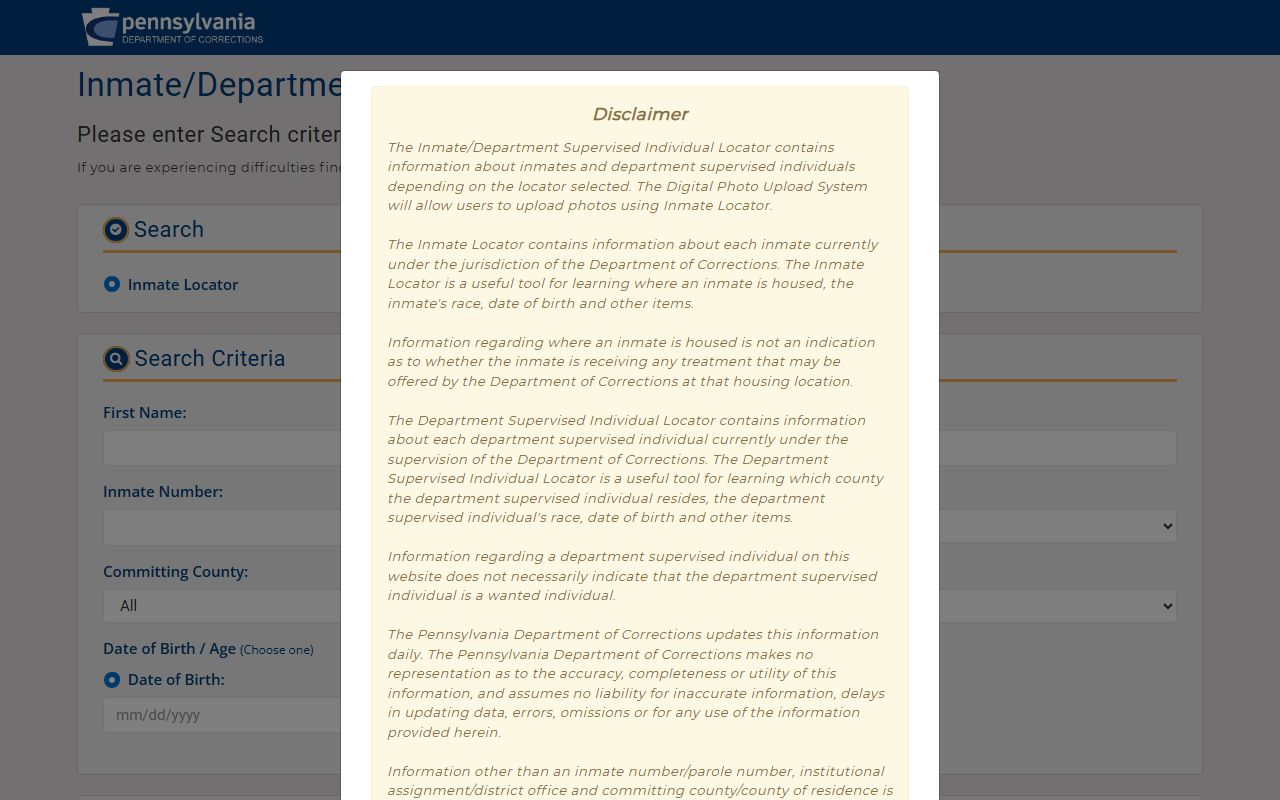
The Pennsylvania DOC inmate and parolee locator covers state custody, which is separate from the county jail population.
Where the Population Data Comes From
The most reliable Dauphin County population data comes from the county itself. The Criminal Justice Advisory Board Quality Assurance Sub-Committee produced the February 2025 point-in-time study, posted through the prison news page in October 2025. Questions go to the board's dedicated email address listed on that page.
Custody-status alerts come from a separate service, which can notify you when a person's status changes in a participating facility. That tool tracks individuals, not population totals, so it answers a different question than a study does.
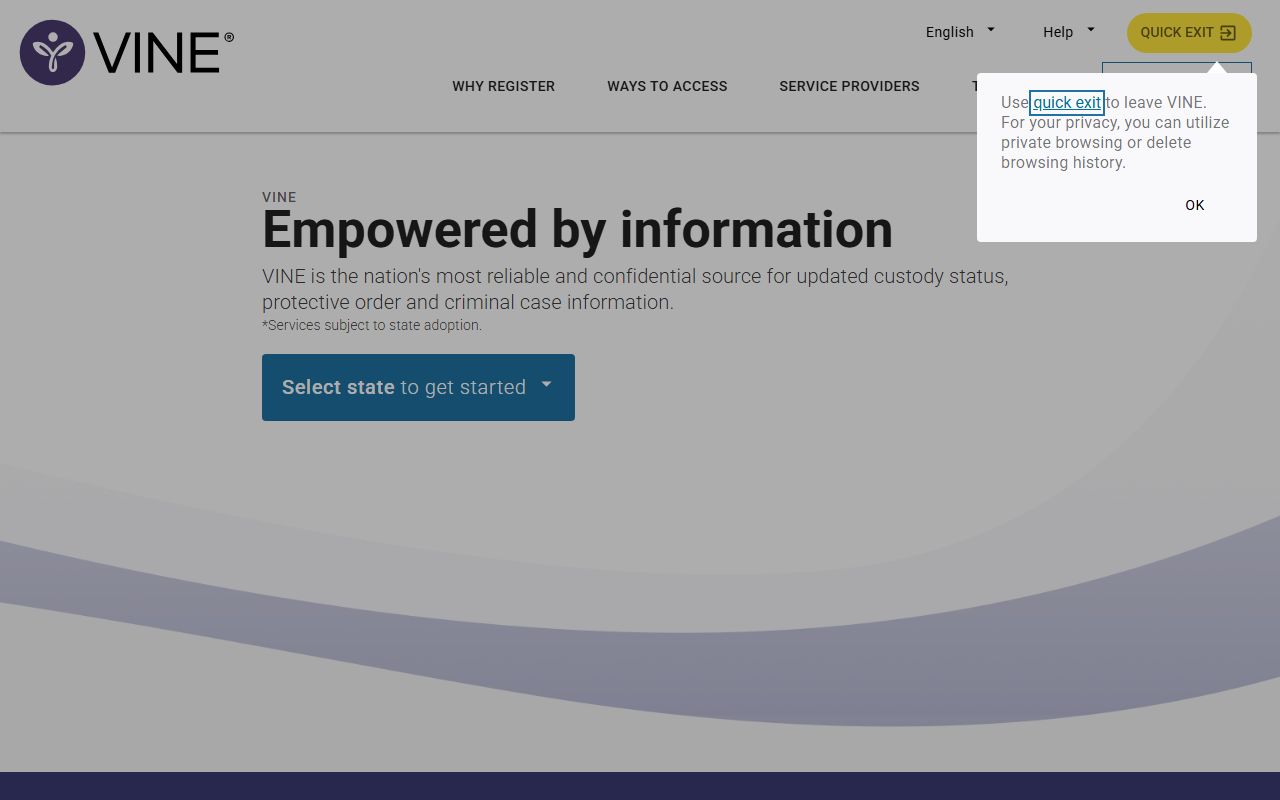
VINELink offers custody-status notifications, which complement the official population study with real-time alerts on a single person.