
How to Search Dauphin County Court Records
Most Dauphin County court records are searched through two free tools. The county Prothonotary runs a civil case search for Common Pleas civil matters. The statewide Unified Judicial System (UJS) portal covers criminal dockets, Magisterial District Court cases, traffic citations, and appeals. Estate and marriage records sit with a third office. Pick the right tool for the record you want, and you save a lot of time.
Before you start, gather what you know. A docket number gives the fastest result. A full name, a rough filing date, and the court level also help narrow a search. Dauphin County is county code 22 in Common Pleas docket numbers and district 12 in magisterial dockets.
The county's Dauphin County Courts page links the main court departments and offices. It is a good landing spot before a search.
The courts page lists Court Administration, the judges, probation, fines and costs, and the Self Help Center, so it doubles as a directory when you are unsure which office to call.
- Decide the record type: civil, criminal, traffic, estate, or marriage.
- For civil Common Pleas cases, open the Prothonotary Searchable Civil Records page.
- For criminal, magisterial, traffic, or appellate dockets, use the UJS Web Portal case search.
- Search by docket number if you have one, or by participant name plus Dauphin County.
- Open the docket sheet, review the entries, and request a certified copy from the clerk if you need an official record.
Dauphin County Court Records Search Fields
The UJS case search is the workhorse for criminal and magisterial dockets. It offers many search modes, but a handful do most of the work for Dauphin County users. The fields below are the ones people reach for first.
| Field | Type | Required | Notes / Format |
|---|---|---|---|
| Search By | Dropdown | Yes | Pick Docket Number, Participant Name, Citation Number, or OTN. |
| Docket Number | Text | When selected | Common Pleas example CP-22-CR; magisterial example MJ-12. |
| Participant Name | Text | When selected | Last and first name; narrow by county. |
| County | Dropdown | Conditional | Select Dauphin for county results. |
| Date Filed | Date | Conditional | mm/dd/yyyy; 180-day max range. |
| Case Status | Dropdown | Optional | Active, Closed, Inactive, and more. |
The portal warns that juvenile, expunged, and limited-access cases may not show up even when your search terms are right. Docket sheets are also not a substitute for a state criminal-history check.
The Dauphin County Judicial System
Pennsylvania runs a single, statewide court system. Dauphin County is the 12th Judicial District, and its main trial court is the Court of Common Pleas. That court hears the full gamut of cases: criminal and civil jury trials, juvenile hearings, support, custody, divorce, adoption, estate matters, guardianship, land-use disputes, name changes, and emergency injunctions. Below it, Magisterial District Courts handle the smaller and early-stage matters.
Appeals climb a clear ladder. Most criminal and civil appeals go to the Superior Court of Pennsylvania. Cases against state and local government go to the Commonwealth Court. The Supreme Court of Pennsylvania is the court of last resort.
Case flow: Magisterial District Court › Court of Common Pleas › Superior Court or Commonwealth Court › Supreme Court of Pennsylvania
The Court of Common Pleas judges page places the court in the Dauphin County Courthouse at the corner of Front and Market Streets in Harrisburg.
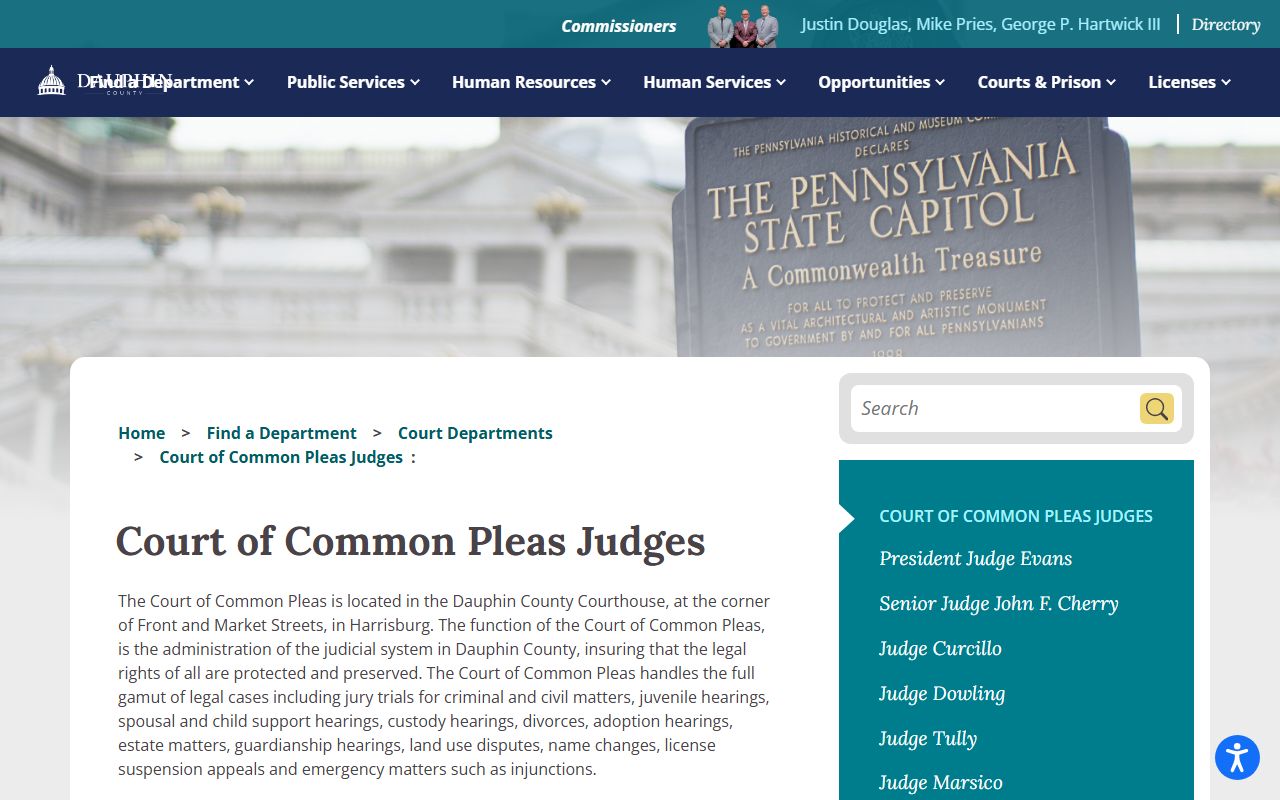
That directory lists each judge, courtroom, and direct phone line, which helps if your case is already assigned.
| Court | Jurisdiction | Case Types |
|---|---|---|
| Supreme Court of Pennsylvania | Statewide, court of last resort | Discretionary and direct review |
| Superior Court | Intermediate appellate | Most criminal and civil appeals |
| Commonwealth Court | Intermediate appellate | Government and agency matters |
| Court of Common Pleas | 12th Judicial District trial court | Felony, major civil, family, juvenile, estate |
| Magisterial District Courts | Minor courts | Traffic, small claims, preliminary hearings |
Dauphin County Courthouse and Court Offices
Court work in Dauphin County is concentrated at one address. The Dauphin County Courthouse at 101 Market Street, Harrisburg, holds the Common Pleas judges and the three record offices. The Prothonotary is in Room 101. The Clerk of Courts is in Room 100. The Register of Wills and Clerk of the Orphans' Court is in Room 103. The Sheriff sits on the first floor in Room 104. The Law Library and Self Help Center are on the fourth floor.
Unless a court notes otherwise, the courthouse is open 8:00 a.m. to 4:30 p.m., Monday through Friday. The Dauphin County government homepage is the entry point for these offices and county services.
From that homepage you can reach every elected office that holds court records, plus the prison, the courts, and open-records contacts.
Dauphin County Courthouse
101 Market Street
Harrisburg, PA 17101
(717) 780-6520
Open 8:00 a.m. to 4:30 p.m., Mon-Fri
Dauphin County Judicial Center
451 Mall Road
Harrisburg, PA 17111
(717) 780-6824
Central Court and Night Court
Northern Dauphin Office
295 State Drive
Elizabethville, PA 17023
(717) 905-2700 ext. 2507
Register of Wills branch, select Wednesdays
Types of Court Records Available in Dauphin County
Dauphin County court records cover a wide range of case types, and different offices hold different files. Civil and divorce papers go to the Prothonotary. Criminal and juvenile records go to the Clerk of Courts. Estates and marriage records go to the Register of Wills and Clerk of the Orphans' Court. The statewide UJS portal pulls many of these dockets into one search.
The main record groups break down like this:
- Civil records - lawsuits, judgments, name changes, and landlord-tenant cases filed with the Prothonotary.
- Criminal records - charges, pleas, and sentences kept by the Clerk of Courts; see arrest records too.
- Family and divorce records - support, custody, and divorce matters in the civil division.
- Estate and probate records - wills, letters, and guardianships at the Orphans' Court.
- Traffic records - citations and summary offenses handled by the Magisterial District Courts.
What Dauphin County Court Records Show
A Dauphin County court record, often viewed as a docket sheet, lays out a case from filing to final order. The header names the court and the parties. The body lists every filing and event in date order. Criminal dockets add charge and sentence detail. The table below shows the core fields you will read on most records.
| Field | What It Shows |
|---|---|
| Case Number | The docket number, such as CP-22-CR for a Dauphin criminal case. |
| Filing Date | When the case opened with the court. |
| Parties | Plaintiff, defendant, petitioner, or respondent, plus attorneys of record. |
| Charges / Cause | The charged offense and statute, or the civil claim. |
| Disposition | The current or final outcome of each charge or claim. |
| Sentence / Judgment | The penalty, award, costs, fines, or restitution ordered. |
Some fields stay hidden. Social security numbers, account numbers, minors' names, and abuse-victim details are redacted under court access rules.
Public Access Laws for Dauphin County Court Records
Two tracks govern access in Pennsylvania. County administrative records fall under the Right-to-Know Law, run by a local open-records officer with appeals to the state. Court case records follow the Unified Judicial System's public-access policy and the rules of court. Dauphin County sends general records requests to its Open Records Officer and routes criminal-record questions to the District Attorney's office.
Court dockets are public, but they come with limits. The UJS warns that a docket sheet is not a criminal-history background check. Several statutes shape what you can and cannot see.
Key Statutes:
18 Pa.C.S. Chapter 91 - the Criminal History Record Information Act controls how criminal records are shared and used.
18 Pa.C.S. § 9122 - sets when an adult criminal record can be expunged.
42 Pa.C.S. Chapter 63 - the Juvenile Act keeps most juvenile records confidential.
Right-to-Know appeals for non-criminal records go to the Pennsylvania Office of Open Records. The agency posts its own forms and appeal steps.
Records That Are Restricted or Confidential
Not every case is open. Pennsylvania law and court policy seal whole categories of records. Juvenile cases are confidential. Expunged and limited-access cases drop out of public search results. Adoption and termination files are closed. Sealed search warrants and grand jury matters stay hidden until a court unseals them.
To view a sealed record, you generally need a court order or a clear legal interest. The path runs through the court that holds the file. The Clerk of Courts can point you to the right petition for criminal matters, and the Self Help Center stocks the confidential-information forms that many filings require.
Magisterial District Courts in Dauphin County
Magisterial District Courts are the front door of the system. They handle traffic and non-traffic citations, minor criminal charges, landlord-tenant disputes, and small civil claims up to $12,000. They also set bail, issue arrest warrants, and hold the preliminary hearings that decide whether a criminal case moves up to Common Pleas. The Magisterial District Judge directory lists each office.
The 12th Judicial District runs fifteen Magisterial District Courts plus Night Court and Central Court at the Judicial Center on Mall Road. The directory carries each court's address, phone, and email.
| Feature | Court of Common Pleas | Magisterial District Court |
|---|---|---|
| Role | General-jurisdiction trial court | Minor court, first step |
| Civil limit | No dollar cap | Up to $12,000 |
| Criminal | Felony and misdemeanor trials | Summary cases, preliminary hearings |
| Records held by | Prothonotary and Clerk of Courts | Searched through UJS |
Specialty Courts in Dauphin County
The 12th Judicial District runs several problem-solving court programs for eligible people. These programs trade jail time for treatment, supervision, and regular status hearings. The court programs page lists the current options.
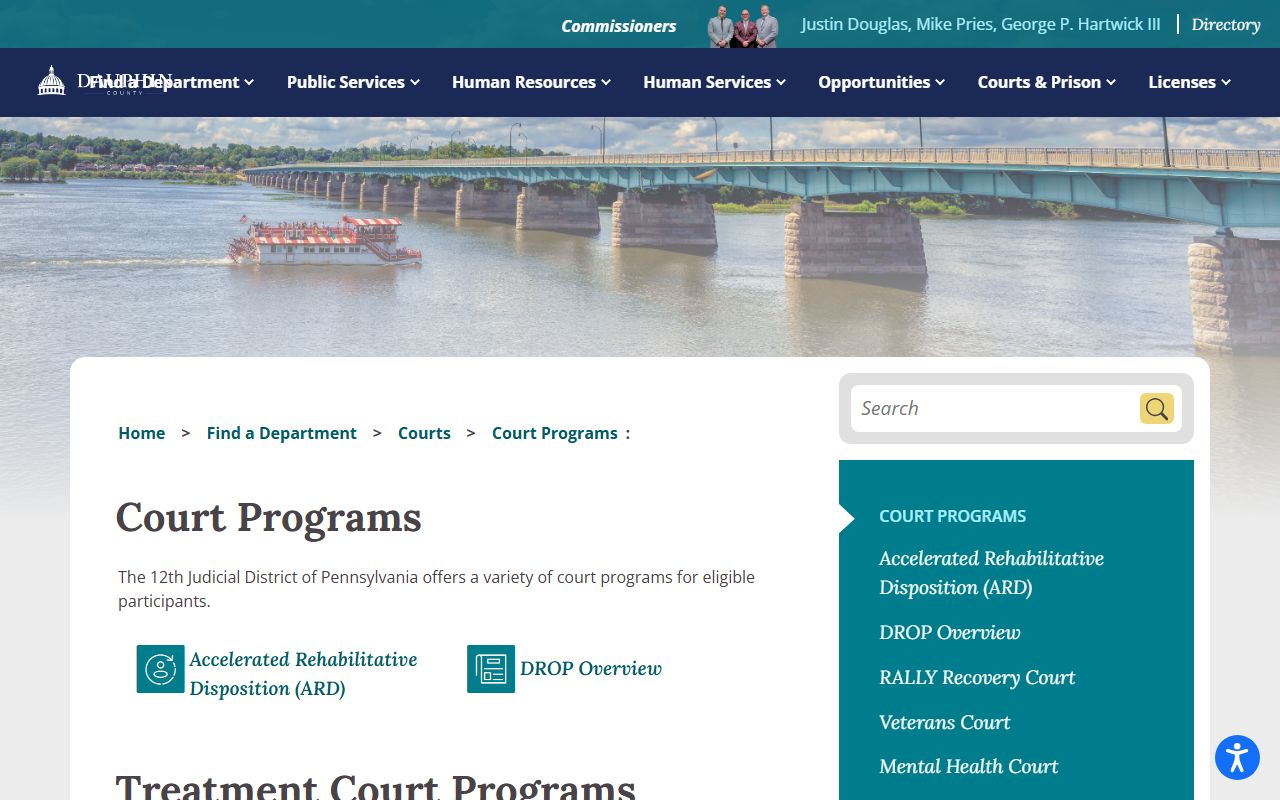
Listed programs include Accelerated Rehabilitative Disposition (ARD) for eligible first-time offenders, RALLY Recovery Court, Veterans Court, Mental Health Court, and Team MISA for mental illness and substance use needs. Completing a program can lead to dismissal or expungement eligibility, with rules set by the court and District Attorney.
Dauphin County Sheriff and Prison
Sheriff Nicholas Chimienti Jr. leads a department that works as an arm of the court. Deputies transport prisoners, secure courtrooms, serve court papers, and issue concealed-carry permits. The Sheriff's office is on the first floor of the courthouse in Room 104.
Dauphin County Prison sits at 501 Mall Road in Harrisburg. The facility serves roughly 1,000 inmates across minimum to maximum security. For a name lookup, use the Dauphin County inmate records page, and check the warrant records page for how active warrants appear on court dockets.
Marriage, Estate, and Orphans' Court Records
The Register of Wills and Clerk of the Orphans' Court is one dual office at the courthouse. It probates wills, grants letters to estate representatives, collects state inheritance tax, and processes marriage licenses. It keeps marriage records back to 1885 and estate records to the late 1700s. For these files, see the marriage and divorce records page and the Orphans' Court page.
- Prothonotary
- Pennsylvania's civil clerk for the Court of Common Pleas.
- Register of Wills
- The official who probates wills and grants estate letters.
- Letters Testamentary
- Court authority given to an executor named in a will.
Dauphin County Court Records Fees
Copy and certification fees vary by office. The Register of Wills and Clerk of the Orphans' Court publishes the most detailed fee bill, and its copy charges give a good guide to what county record offices charge. Plan to pay by check, money order, or card; some offices do not take cash.
| Item | Amount |
|---|---|
| Certified copy, 5 pages or fewer | $10.00 |
| Each additional page | $1.00 |
| Certified copy of a marriage record | $10.00 |
| Records search fee, per name | $55.00 |
| Digital copies, 1 to 100 pages | $45.00 |
Note: County fees change by ordinance and court order, so confirm the current amount with the record office before you send a payment.
How to Interpret Dauphin County Court Records
Dauphin County court records use shorthand. A docket lists events such as complaint filed, preliminary hearing, information filed, plea, and sentence. The disposition tells you the result of each charge. A charge is only an accusation. A conviction or guilty plea is the outcome that follows. Reading both fields keeps you from mistaking an open case for a closed one.
Court calendars also help you track when a case is heard. The county posts yearly schedules for arbitration, trial weeks, drug court, mental health court, and more on its court calendar page.
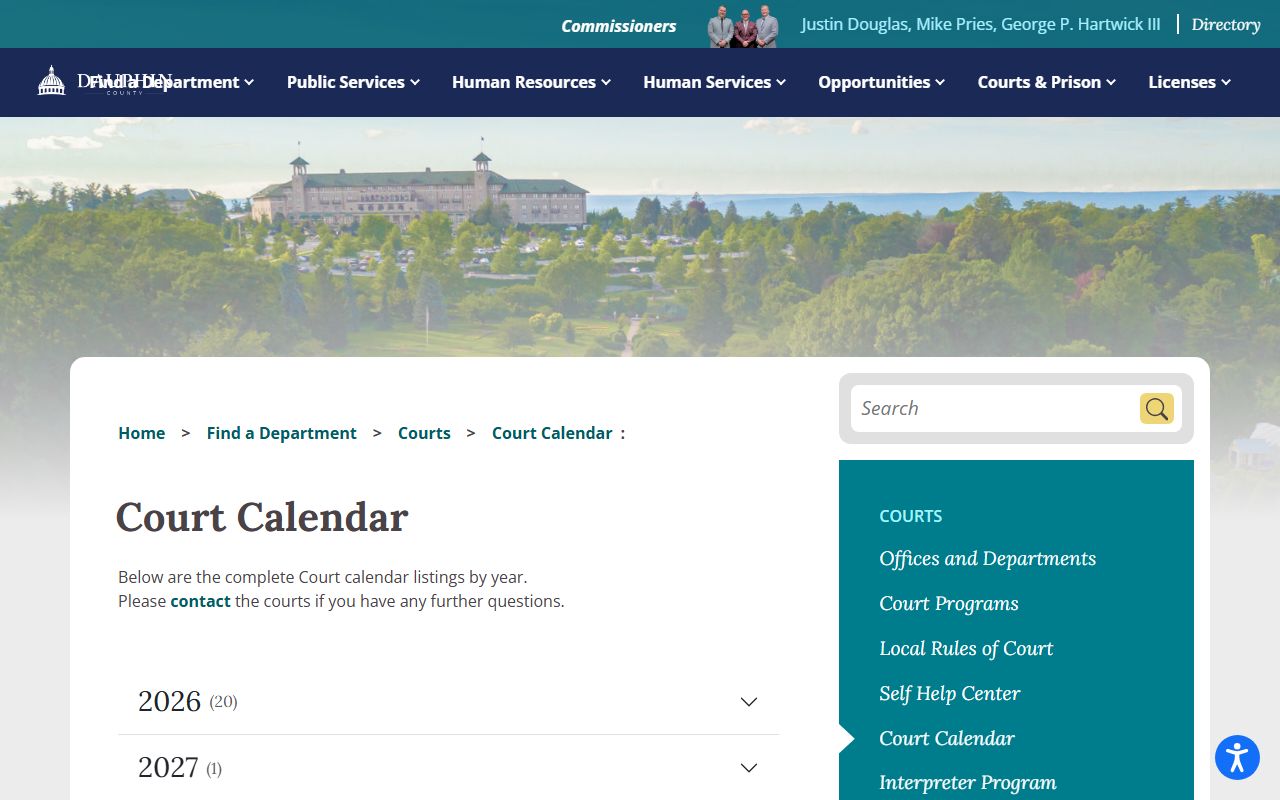
The calendar archive reaches back several years, which is useful when you need to confirm when a hearing or trial week took place.
Self-Help and Legal Aid in Dauphin County
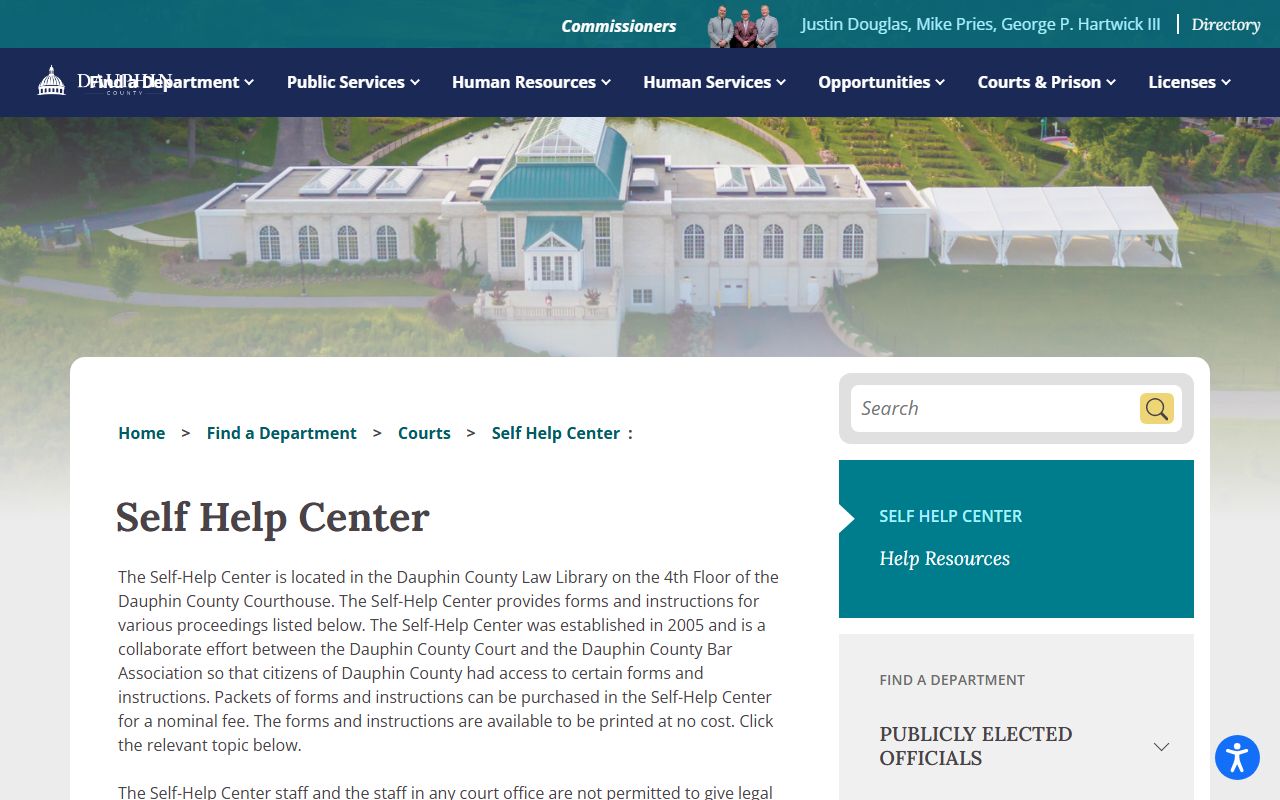
People without a lawyer have real support in Dauphin County. The Self Help Center sits in the Law Library on the fourth floor of the courthouse. It started in 2005 as a joint effort of the court and the Dauphin County Bar Association. Staff cannot give legal advice, but they hand out forms and instructions for divorce, custody, protection-from-abuse, and fee-waiver filings.
The county's Self Help Center page posts free forms you can print, and packets can be bought on site for a small fee.
For a lawyer referral, the Bar Association line is (717) 232-7536, and MidPenn Legal Services helps with custody at (717) 232-0581.
The same floor holds the county Law Library, which stocks legal reference material and houses the Self Help Center.
The court also offers free language interpreters for people with limited English. Requests go to the Language Access Coordinator in Court Administration.
History of the Dauphin County Courts
Dauphin County keeps some of the oldest record sets in the state. Estate and Orphans' Court records reach back to the late 1700s. Marriage licenses run from 1885. Inheritance tax dockets start in 1917. The Register of Wills office has scanned and indexed nearly all of it, and in March 2020 it became the first in Pennsylvania to offer virtual marriage licenses and probate. That mix of very old dockets and modern online access shapes how you search today.
Frequently Asked Questions
How do I search Dauphin County civil court records?
Use the Prothonotary's Searchable Civil Records page. Current civil cases run from November 1, 2001 to the present in the public search. Older indexes are split into legacy systems that reach back to 1785. The official records still live in the Prothonotary's office, so call there for a certified copy.
Who keeps criminal court records in Dauphin County?
The Clerk of Courts keeps criminal and juvenile records for the Court of Common Pleas. The office is at 101 Market Street, Room 100, in Harrisburg. It also handles bail, prison commitments, motions, summary appeals, and appellate filings. See the Clerk of Courts page for more.
Can I use the UJS portal as a background check?
No. The portal states that docket sheets should not stand in for a criminal-history background check. Those checks run through the Pennsylvania State Police, not a county docket search.
Where do I get a marriage license?
The Register of Wills and Clerk of the Orphans' Court processes marriage licenses. Both people must apply, be 18 or older, and finish by video or in-person appointment. The license must be obtained at least three days before the ceremony. See the marriage and divorce page.
How do I find a Dauphin County inmate?
Start at the Dauphin County Prison page and use its inmate lookup link. If the person is state-sentenced, use the Pennsylvania Department of Corrections locator instead. The inmate records page walks through each tool.
Why can't I find a case online?
Common reasons include the wrong court, a spelling difference, a recent filing not yet posted, an older civil case in a legacy index, or a juvenile, expunged, sealed, or limited-access case that does not display. More answers sit on the FAQ page.